Premium travel on long haul flights is defined by comfort, space, and the ability to arrive well rested. Unlike short flights, where service differences are often limited, long haul journeys place much greater emphasis on seat design, sleep quality, privacy, and the overall onboard experience. A true premium cabin is not only about a wider seat, but about how well that seat transforms into a bed, how much personal space surrounds it, and how seamlessly the journey flows from the airport lounge to landing.
For most travelers, Business Class represents the core premium experience. It offers lie flat beds, elevated dining, priority ground services, and a quieter cabin environment, making it the most popular premium product offered by airlines worldwide. On long overnight flights, Business Class often strikes the best balance between comfort and value, which explains its broad availability across routes and aircraft types.
However, for travelers who seek even more space, privacy, and exclusivity, airlines offer higher tier premium products on select long haul flights. First Class and Luxury Suites push the experience further with larger private spaces, personalized service, and in some cases fully enclosed rooms in the sky. These cabins are designed not simply for transportation, but for travelers who view the journey itself as part of the luxury experience.
Understanding how these premium cabin classes differ, and why not all premium cabins deliver the same experience, is essential when planning a long haul trip.
Business Class
Business Class is the most common premium cabin on long haul flights, but the experience varies widely depending on airline, aircraft, and seat generation. A Business Class ticket does not automatically guarantee privacy, space, or direct aisle access.
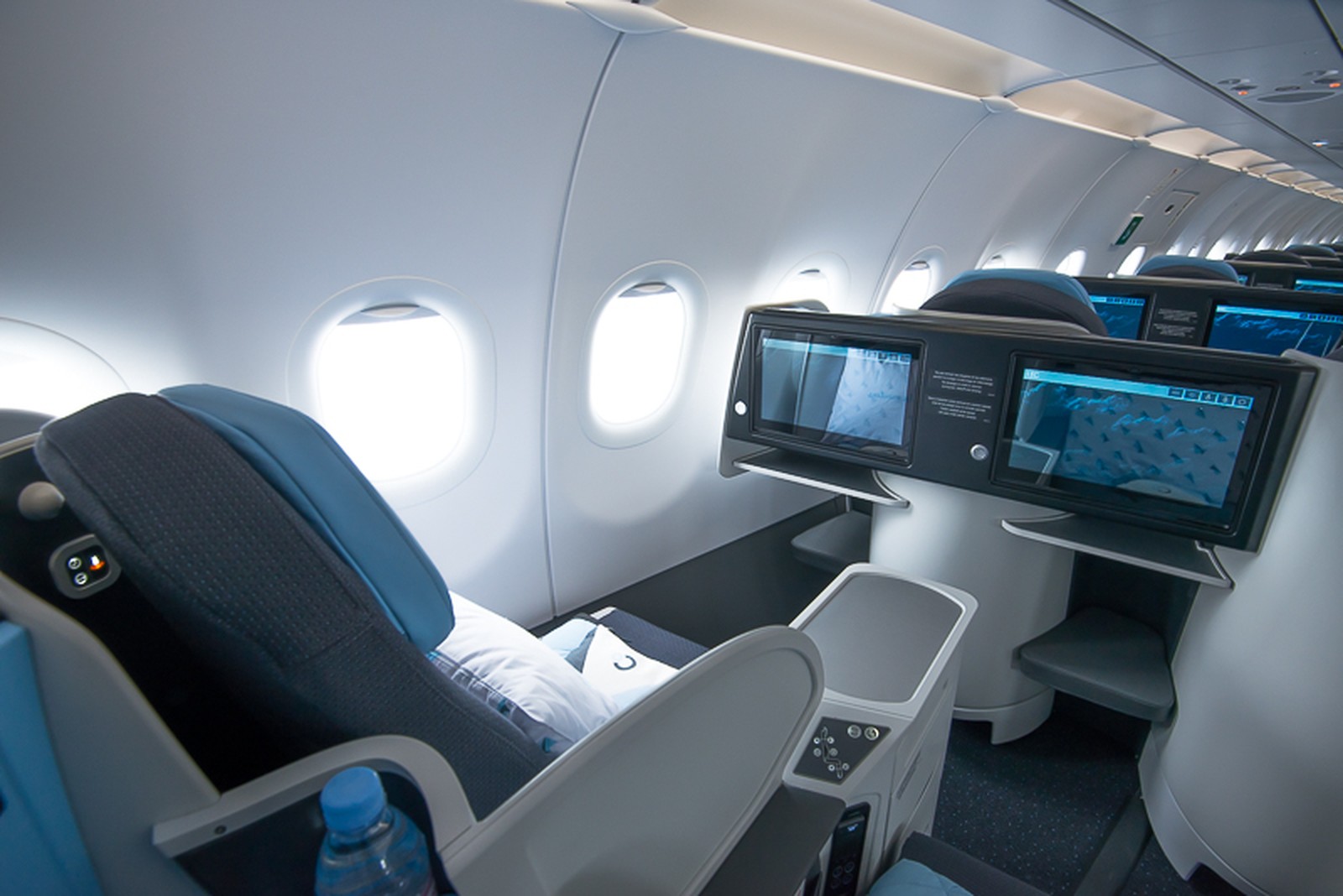 Lie-flat Business Class seat on the La Compagnie Airbus A321, offering a fully flat bed but with less privacy compared to other long-haul Business Class products. Photo by La Compagnie.
Some airlines still operate less competitive layouts. La Compagnie uses a 2-2 configuration on long haul routes, which offers wider lie-flat seats but limited privacy and no aisle access for all passengers. Older Business Class cabins from Japan Airlines featured a 2-3-2 layout that provided aisle access but sacrificed personal space and overall comfort.
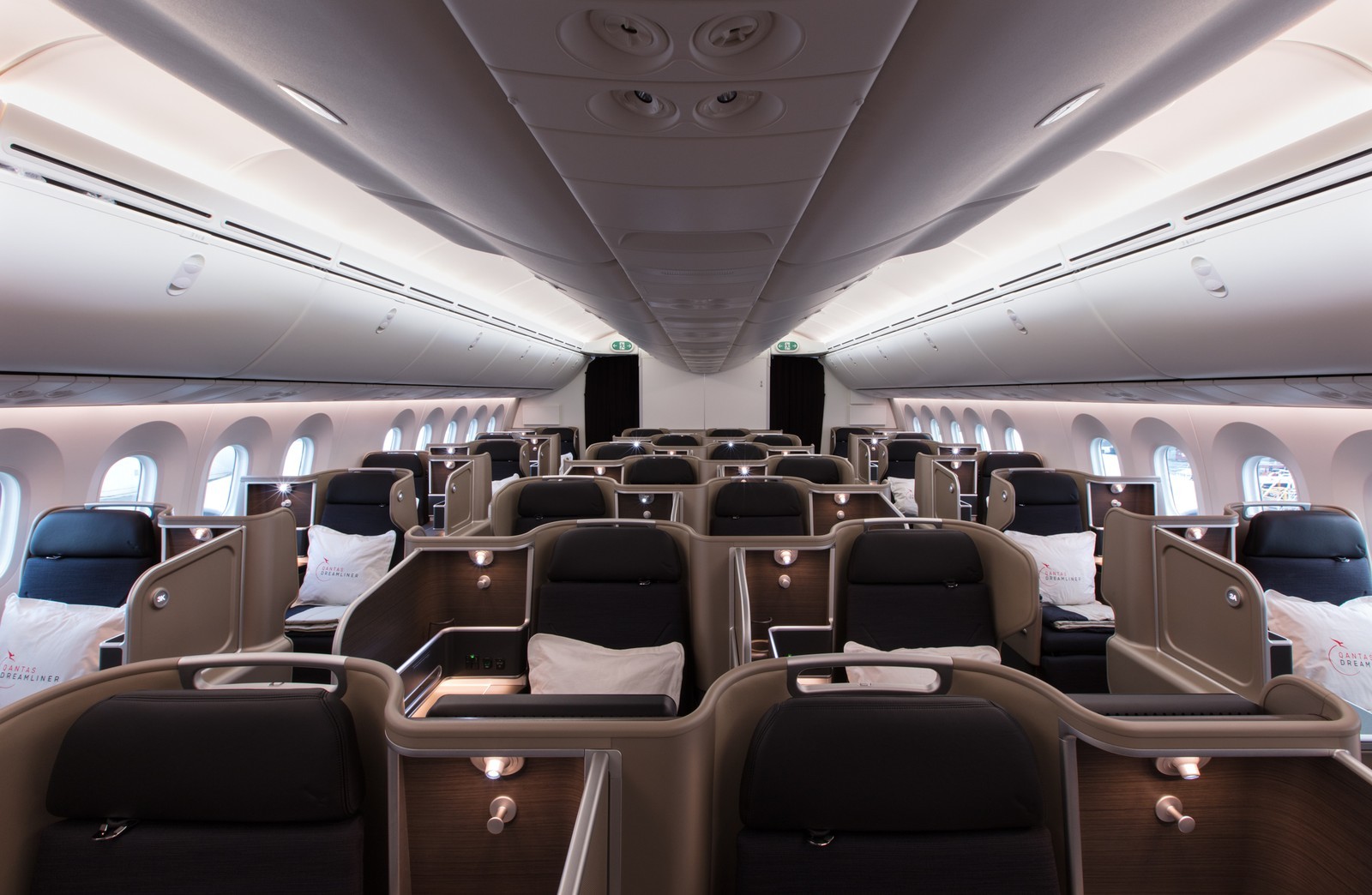 Lie-flat Business Class cabin in a 1-2-1 configuration on the Qantas Boeing 787 Dreamliner, providing direct aisle access for every passenger on long-haul flights. Photo by Qantas.
Today, the expected standard for long haul Business Class is a 1-2-1 configuration, ensuring direct aisle access for every passenger. Even within this standard, quality varies.
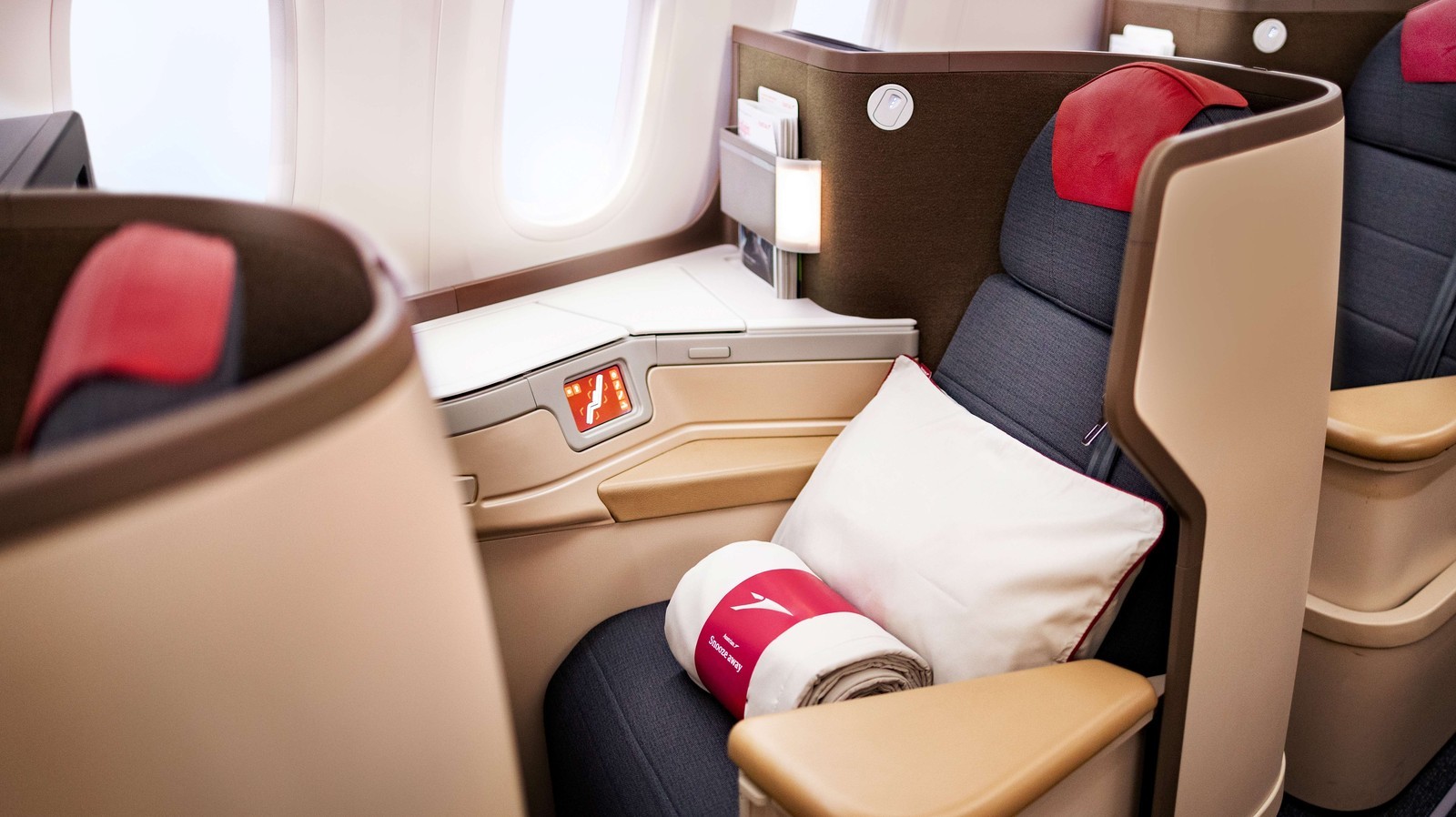 Lie-flat Business Class seat on the Austrian Airlines Boeing 787 Dreamliner, designed for restful long-haul travel. Photo by Austrian Airlines.
Reverse herringbone and staggered layouts generally provide better privacy, while some 1-2-1 cabins still feel exposed due to seat orientation. Only a limited number of airlines currently offer fully enclosed Business Class suites with doors, typically on their newest aircraft.
What Defines a Good Business Class Choice
A good long haul Business Class product is defined by how effectively it supports rest, privacy, and comfort over extended flight times.
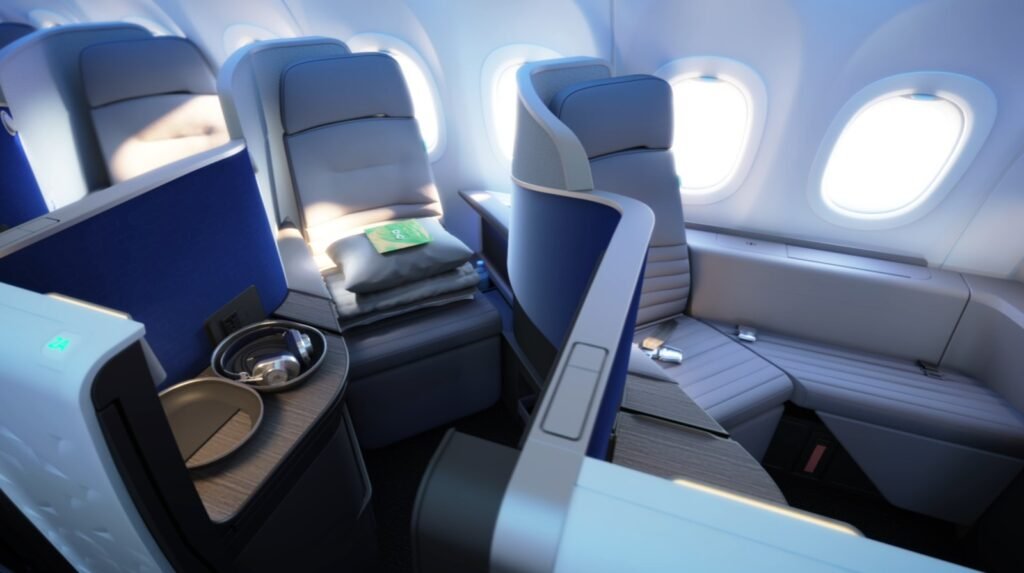
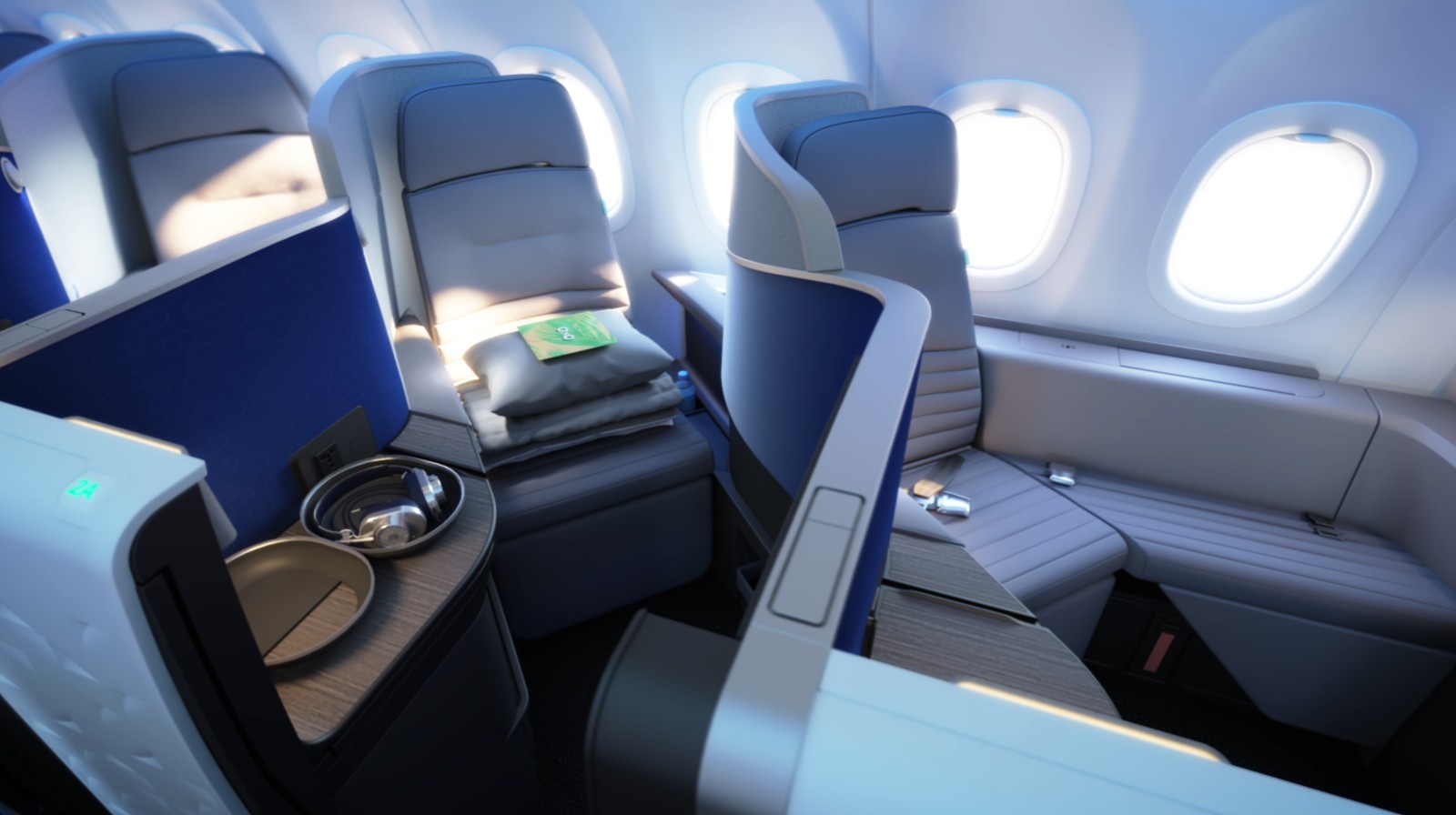 Private Business Class suite in JetBlue Mint on transcontinental and long-haul flights with enhanced privacy for premium travel. Photo by JetBlue.
Several key factors help distinguish a strong product from an average one:
- Seat configuration – Direct aisle access for every passenger is essential
- Bed quality – A fully flat bed with sufficient length and support for proper sleep
- Privacy – Adequate separation from neighboring seats, through layout or physical dividers
- Cabin density – Fewer seats generally mean a quieter, more relaxed environment
- Personal space – Practical storage, workspace, and freedom of movement
Consistency across an airline’s fleet also matters. The same Business Class label can represent very different experiences depending on aircraft type and seat generation.
Business Class Lite
Business Class Lite usually offers the same seat as standard Business Class but with reduced inclusions. Lounge access may be restricted, onboard service simplified, and fare flexibility limited. While this option can provide good value for travelers focused mainly on the seat and bed, the overall premium experience is noticeably lighter.
Regional Business Class
The full Business Class experience is designed primarily for long haul flights. On medium haul routes, some airlines operate widebody aircraft with true lie flat seats, such as Singapore Airlines on select Southeast Asian routes or Emirates on certain regional services.
On most short haul European routes, Business Class is typically an Economy seat with the middle seat blocked. Service and flexibility may improve, but seat comfort remains largely unchanged. This reinforces why Business Class should always be evaluated based on aircraft and route, not the cabin name alone.
First Class
First Class represents a higher tier of premium travel, defined by space, privacy, and a highly personalized service experience. While Business Class focuses on comfort and efficiency, First Class is designed to feel exclusive, with fewer passengers and a more relaxed pace throughout the journey.
Seats are significantly larger, often allowing more freedom of movement, and privacy is prioritized through wider spacing or enclosed suites. Dining is more flexible and personalized, and the ground experience typically includes access to dedicated First Class lounges and priority services at every stage of travel.
Why First Class Is Less Common
Unlike Business Class, First Class is not offered on most long haul flights. Demand is limited, operating costs are high, and many airlines have chosen to invest in increasingly sophisticated Business Class products instead.
As a result, First Class is usually restricted to flagship routes and specific aircraft types. Even within the same airline, availability can vary by route and aircraft, making careful selection essential when booking.
Aircraft and Airlines Offering First Class
First Class cabins are most commonly found on large long haul aircraft such as the Airbus A380 and Boeing 777. Airlines known for operating international First Class include Emirates, Singapore Airlines, Lufthansa, Air France, and Japan Airlines.
In many cases, First Class is available only on select long haul routes, even when the aircraft itself is part of the airline’s long haul fleet.
Different Types of First Class Experiences
First Class is not a single, standardized product. Some airlines offer open suites with generous spacing, while others provide fully enclosed private suites with doors.
Lufthansa Allegris First Class Suite Plus featuring refined materials and a private, room-like layout for premium long-haul travel. Photo by Lufthansa.
Differences between First Class products may include:
- Suite size and overall cabin layout
- Level of enclosure and privacy
- Individual versus paired seating arrangements
- Dining flexibility and service style
These variations mean that two First Class tickets can deliver very different experiences, depending on airline, aircraft, and route.
Domestic First Class
On domestic routes, particularly within the United States, First Class is a very different product from international long haul First Class. Seating is usually arranged in a 2-2 configuration with limited privacy and shorter range service. While more comfortable than Economy, it is closer to regional Business Class than to the luxury associated with international First Class cabins.
This distinction reinforces that the true First Class experience is designed primarily for long haul international travel.
Luxury Suites
Luxury Suites represent the highest level of premium travel in commercial aviation. These cabins go beyond traditional First Class by offering near total privacy, exceptional space, and a highly personalized service model. They are available only on select long haul routes, specific aircraft, and with a limited number of airlines.
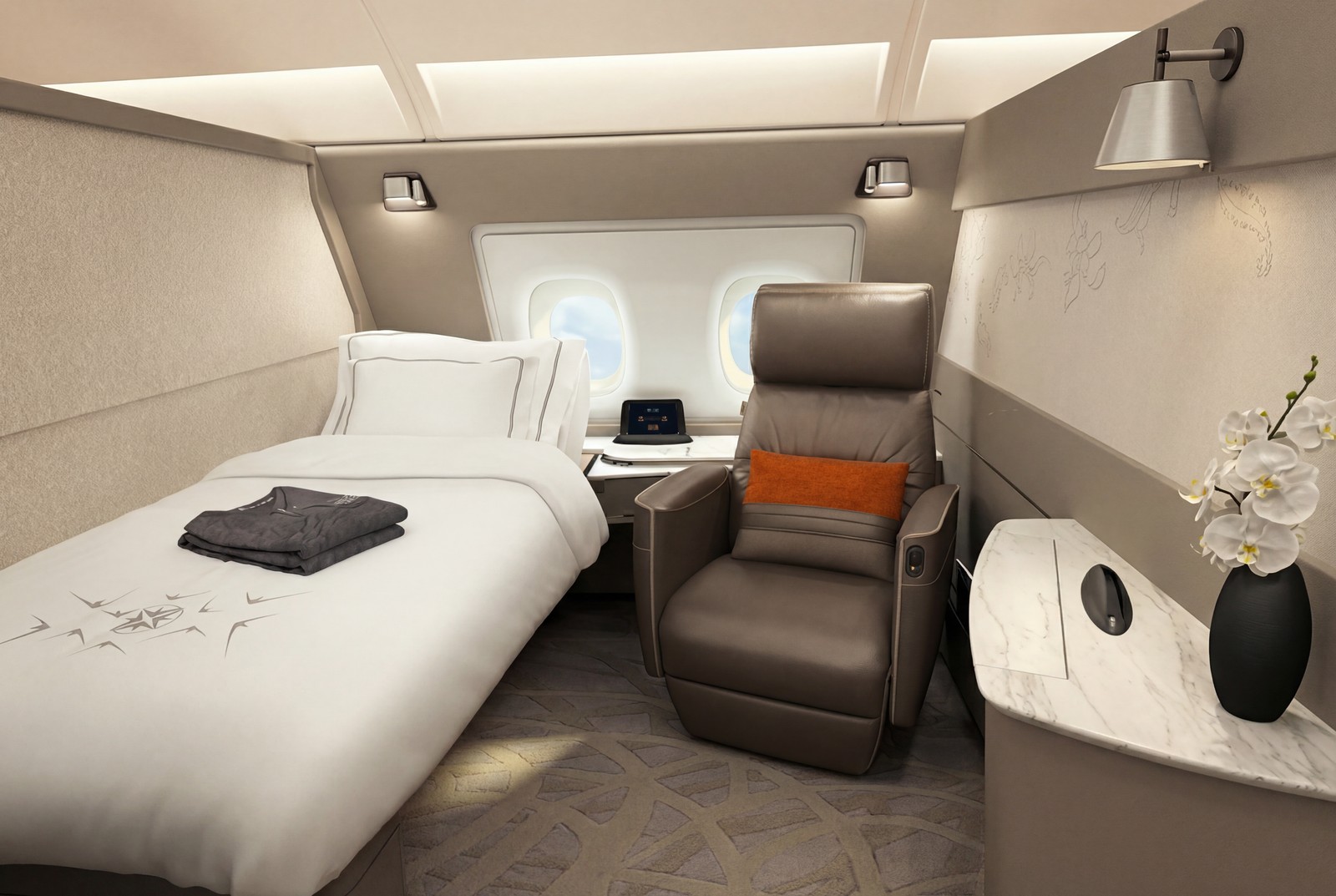 Private First Class suite on Singapore Airlines, designed as a personal sanctuary with exceptional space and privacy for long-haul travel. Photo by Singapore Airlines.
Rather than being enhanced seats, Luxury Suites are designed as private rooms in the sky. Passengers typically enjoy enclosed suites with sliding doors, generous living space, and in some cases separate areas for sleeping, dining, and relaxing. Cabin density is extremely low, creating an atmosphere that feels closer to private aviation than commercial air travel.
What Defines a Luxury Suite Experience
A true Luxury Suite is defined by both physical space and exclusivity. Key characteristics usually include:
- Fully enclosed private suites with doors
- Significantly more space than standard First Class
- Dedicated or separate bed and seat on select aircraft
- Highly personalized, on demand dining and service
- Exclusive ground experience and dedicated lounges
On certain aircraft, additional features such as onboard lounges or shower facilities elevate the experience even further, particularly on ultra long haul flights.
Airlines and Luxury Suite Products
Only a small group of airlines operate genuine Luxury Suite products, each with a distinct approach and product name.
- Emirates offers the Game Changer First Class Suite on select Boeing 777 aircraft, featuring floor to ceiling doors and a highly private layout. On the Airbus A380, Emirates also provides First Class suites paired with onboard shower spas.
- Singapore Airlines operates Singapore Airlines Suites on the Airbus A380, with large enclosed suites and separate full size beds, emphasizing space and refinement.
- Etihad Airways introduced The Apartments on the Airbus A380, offering an armchair and a separate bed, along with access to onboard shower facilities and lounges.
- Air France offers La Première, a highly exclusive First Class experience focused on privacy, elegant design, and one of the most refined ground services in aviation.
- ANA features The Suite on select Boeing 777 aircraft, delivering enclosed suites with modern design and high levels of privacy.
- Lufthansa is introducing Allegris First Class Suites, including individual suites and a double suite concept on new generation long haul aircraft.
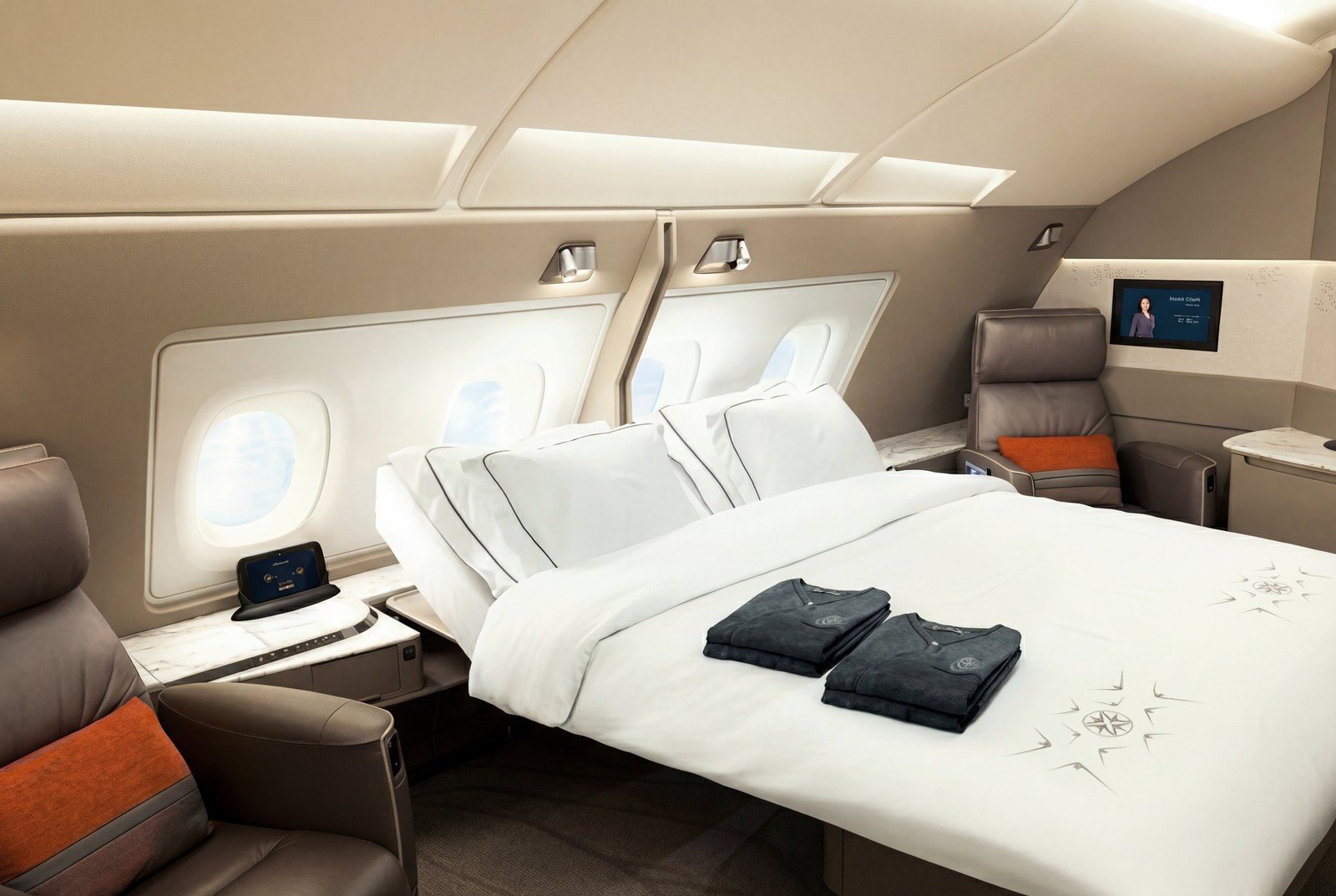
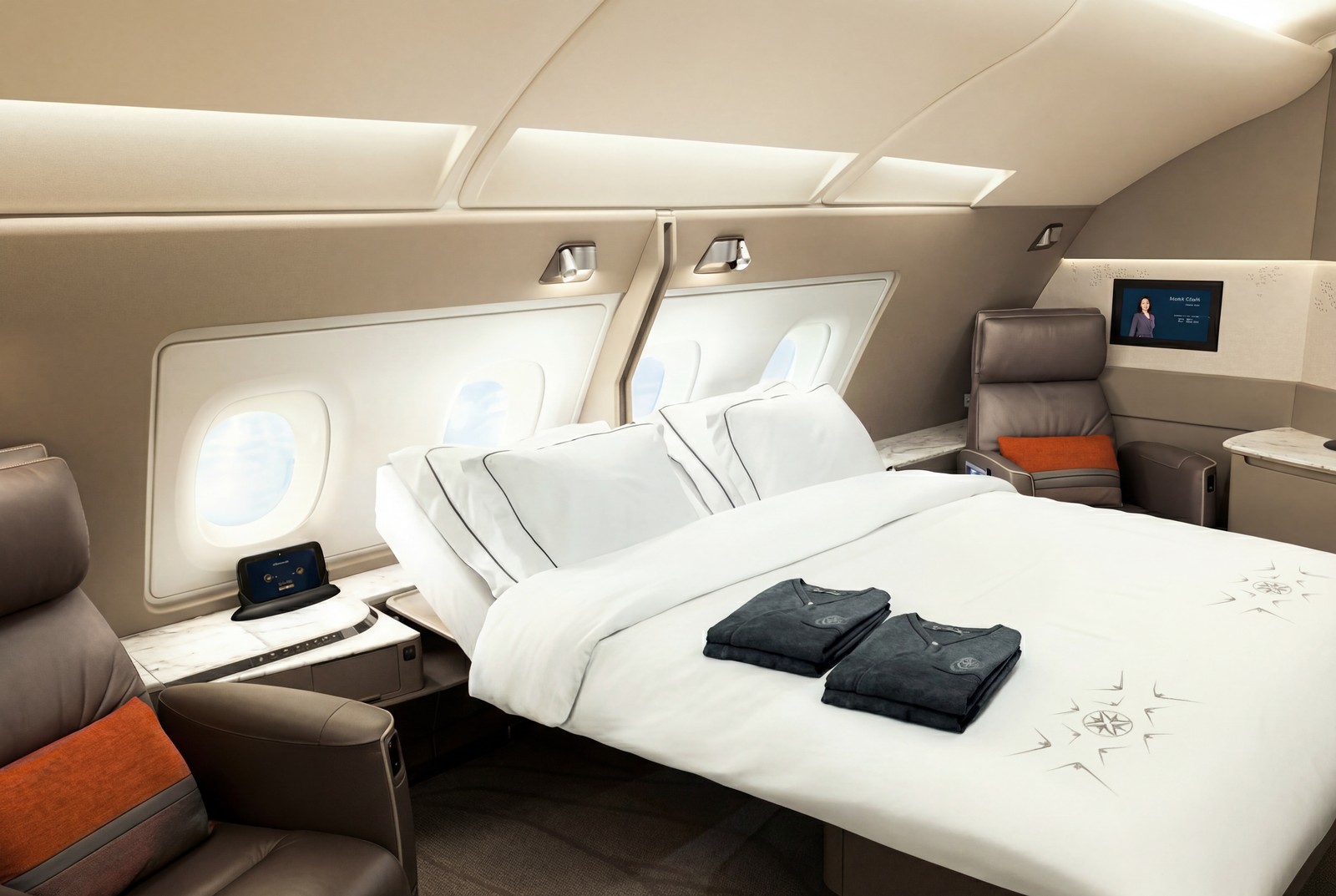 Double First Class Suite on Singapore Airlines Airbus A380, offering a shared luxury experience with a full-size bed on long-haul flights. Photo by Singapore Airlines.
Each of these products differs significantly in layout, suite size, and onboard experience, reinforcing that Luxury Suites are not a standardized offering.
Availability and Limitations
Luxury Suites are extremely limited in availability. They are usually restricted to flagship aircraft and select long haul routes, and even within the same airline, only a small portion of the fleet may feature these cabins. Aircraft substitutions can also affect whether a Luxury Suite is available on a specific flight.
These cabins sit at the very top of airline pricing and are designed for travelers who value privacy, comfort, and the journey itself as an essential part of the experience.
Choosing the Right Travel Experience
Premium cabins are not created equal. Business Class, First Class, and Luxury Suites can differ dramatically depending on the airline, aircraft type, cabin generation, and route. Two flights in the same cabin class may deliver completely different levels of comfort, privacy, and overall experience.
Aircraft choice is especially important. Newer cabins often feature better seat design, improved privacy, and a quieter onboard environment, while older configurations may fall short of modern premium expectations. Route selection also matters, as airlines tend to deploy their best products on flagship long haul flights rather than across their entire network.
For travelers who want to maximize comfort, privacy, and value, simply selecting a premium cabin is not enough. Identifying the right aircraft, seat layout, and airline product is key to creating a truly premium long haul journey.
Fly Me Luxury experts specialize in matching travelers with the best premium cabins, optimal seats, and exceptional value across Business Class, First Class, and Luxury Suites. With the right guidance, premium travel becomes not just more comfortable, but genuinely unforgettable.